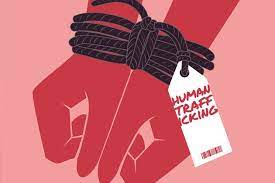
What would it be like to wake up each day and have no say in where you’re going, or what you do? For the 40.3 million people trapped in modern-day slavery, this is their reality. Held against their will, a voice silenced, stifled by abuse, poverty, and cultural norms.
Human trafficking is defined as the recruitment, transportation, transfer, harbouring, or receipt of persons by improper means (abduction, deception, abuse of power or preying on vulnerability) and control for an improper purpose including forced labour or sexual exploitation.
The numbers are staggering and trafficking appears in many forms:
- Forced Labor: 16 million people are being forced to work under the threat of violence and for no pay, treated as property and exploited to create a product for commercial sale.
- Bonded Labor: 4.1 million individuals are compelled to work in order to repay a debt and unable to leave until the debt is repaid.
- Child Labor: 5.5 million children under the age of 18 who are held in any enslavement—whether forced labour, domestic servitude, bonded labour or sex trafficking.
- Sex Trafficking and Prostitution: 4.8 million women, men or children are forced into the commercial sex industry and held against their will by force, fraud or coercion.
- Forced and Child Marriage: Each year 12 million girls are forced to marry without their consent or against their will before the age of 18.*
- Domestic Servitude: Employees working in private homes are forced or coerced into serving and/or fraudulently convinced that they have no option to leave.
An estimated 40.3 million people were victims of modern slavery in 2016. In other words, on any given day in 2016, there were likely to be more than 40 million men, women, and children who were being forced to work against their will under threat or who were living in a forced marriage that they had not agreed to.
Of these 40.3 million victims:
- 24.9 million people were in forced labour. That is, they were being forced to work under threat or coercion as domestic workers, on construction sites, in clandestine factories, on farms and fishing boats, in other sectors, and in the sex industry. They were forced to work by private individuals and groups or by state authorities. In many cases, the products they made and the services they provided ended up in seemingly legitimate commercial channels. Forced labourers produced some of the food we eat and the clothes we wear, and they have cleaned the buildings in which many of us live or work.
- 15.4 million people were living in a forced marriage to which they had not consented. That is, they were enduring a situation that involved having lost their sexual autonomy and often involved providing labour under the guise of “marriage”.
Women and girls are disproportionately affected by modern slavery, accounting for 28.7 million, or 71 per cent of the overall total. More precisely, women and girls represent 99 percent of victims of forced labour in the commercial sex industry and 58 per cent in other sectors, 40 per cent of victims of forced labour imposed by state authorities, and 84 percent of victims of forced marriages.
One in four victims of modern slavery were children. Some 37 per cent (5.7 million) of those forced to marry were children. Children represented 18 per cent of those subjected to forced labour exploitation and 7 per cent of people forced to work by state authorities. Children who were in commercial sexual exploitation (where the victim is a child, there is no requirement of force) represented 21 per cent of total victims in this category of abuse.
In the past five years, 89 million people experienced some form of modern slavery for periods of time ranging from a few days to the whole five years. The average length of time victims were
in forced labour varied from a few days or weeks in some forms imposed by state authorities to nearly two years for forced sexual exploitation.
Even though this market spreads far and wide, there are many who are taking a stand and increasing efforts to assist victims and their loved ones who find themselves involved in this serious and oftentimes life-threatening situation. So, how do you get involved and make a difference? Here are a few suggestions:
- Buy responsibly – Fair Trade items
- Work on “understanding” of victim-centred approach and have a brown bag lunch to fully discuss what this means and what is missing from this model to stop human trafficking
- Volunteer at a local shelter, mentor in reading programs
- Know the indicators or red flags of potential labour and sex trafficking victims
- Program the national hotline number and give this number to 5 other people for them to program in their phones…1-888-3737-888
- If you suspect someone is being trafficked, call the hotline or your local police agency
- Consider becoming a foster parent
- Being a voice—speak up for those who have no voice
 Tech.Aaj.Tak